

If you work in the music industry (or want to be) and you’re not paying attention to Departure Festival, you’re missing out on the most concentrated week of learning, connection, and discovery that Canada has to offer.
We attended and came away with so much new knowledge, ideas, new contacts, and a few artists we can’t stop thinking about.
This is the guide we wish existed before we went …
What Is Departure Festival?
Departure Festival + Conference is an annual music industry conference and festival held each May in downtown Toronto. It brings together artists, managers, label executives, publishers, radio programmers, music supervisors, journalists, podcasters, and creative entrepreneurs from across Canada and around the world.
Think of it as Canada’s answer to South by Southwest, except it’s built around the Canadian music ecosystem and feels a little more manageable in scale without losing the depth.
The event runs across an entire week, typically from the first Monday to the following Sunday in May, with conference programming running during the day and live showcases filling the evenings.
Where Did Departure Come From?
Departure is the reimagination of Canadian Music Week, which spent 42 years as one of the country’s flagship music industry events.
The rebrand isn’t just cosmetic. The organizers at Loft Entertainment and Oak View Group widened the scope to include film, comedy, tech, and broader creative industries, while keeping music at the centre.
The mission, as they put it, is to be a vital commercial hub focused on amplifying the impact of creative work in Toronto and beyond. In practical terms, that means a week where conversations that might normally take months to arrange happen in a single hallway.
Who Goes to Departure?
The delegate mix is genuinely broad.
According to Departure’s own research, 80% of attendees hold primary decision-making power in their organizations. That matters for anyone trying to get in a room with the right people.
You’ll find radio programmers, sync licensing executives, label A&R reps, booking agents, festival producers, publicists, managers, songwriters, and artists at every stage of their careers. There’s a real international contingent too, with delegates coming from the US, the UK, Europe, and beyond.
The event also runs a NextGen program aimed at students, new grads, and early-career professionals, which includes curated programming, one-on-one mentorship, and access to exclusive networking events. It’s one of the better on-ramps into the industry we’ve seen.
What Happens at the Conference?
The daytime conference is where a lot of the real work gets done. Departure typically hosts more than 200 speakers across a week of programming organized into content tracks covering Music, Live Events & Touring, Radio & Audio, Film & TV, Business & Marketing, Culture & Creativity, and Tech & Innovation.
Sessions come in a few formats. Keynotes are the big-room moments with high-profile names. Dialogues pair two industry heavyweights in conversation. Panels, called Spotlights, bring together groups of experts on specific topics. Microsessions go deeper into niche, career-specific content. And Workshops offer hands-on learning with real takeaways.
In 2026, Departure also introduced Summits: focused, single-day intensives built around a specific sector. The four Summits this year were the Creators Summit, the Live Music Summit (presented by Live Nation), the Sync Summit, and the Sports Summit. These ran at Departure House, a pop-up venue at 58 Berkeley St., and each one functioned almost like a mini-conference within the conference.
Radiodays North America
Running inside Departure as an enhanced track, Radiodays North America (RDNA) is the go-to gathering for radio, podcast, and digital audio professionals. It draws an international crowd and covers everything from the role of AI in audio to how to grow a podcast audience in 2026.
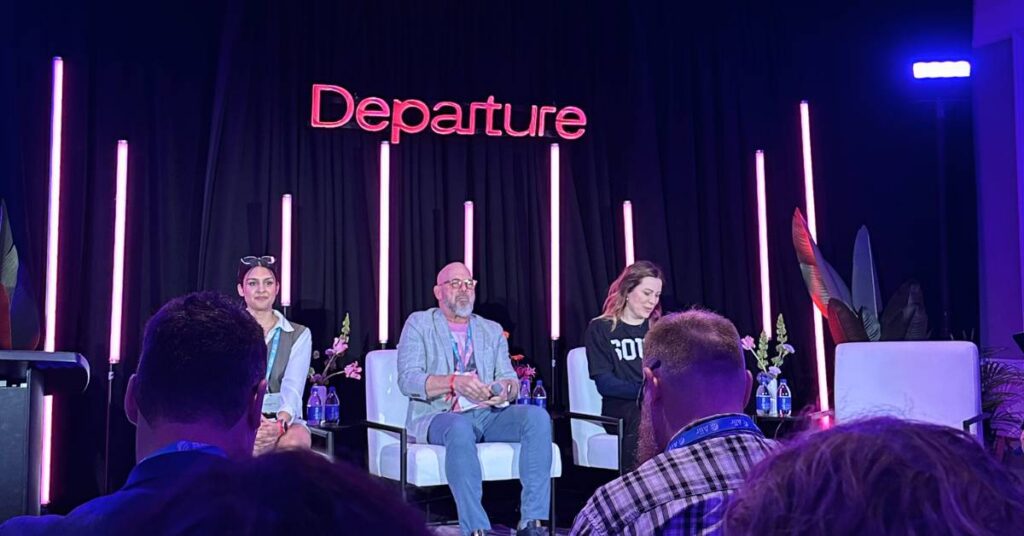
This year’s lineup included Bobby Carter from NPR’s Tiny Desk Concerts, Samantha Moy from BBC Radio 6 Music, Alan Cross, and CRTC Chair and CEO Vicky Eatrides. The sessions we sat in on were substantive and direct, the kind of thing you’d normally get from an expensive industry consultancy.
We also attended Podcast Creators Day, a separate full-day event run in partnership with CBC, NCRA, and Canadaland, covering monetization, video strategy, AI tools, and brand partnerships. Worth the add-on cost.
The Sync Summit
For anyone interested in getting their music placed in film, TV, or games, the Sync Summit is one of the most practical days of the week. The 2026 edition opened with a keynote from Mary Ramos, the legendary music supervisor behind countless Quentin Tarantino films, hosted by music publishing executive Vivian Barclay.
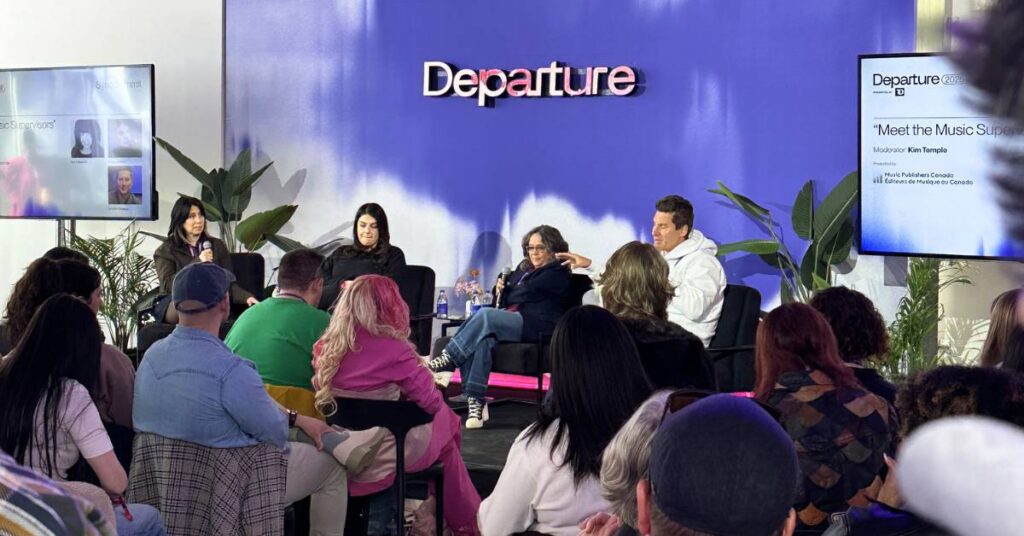
The “Meet the Music Supervisors” panel featured working supervisors from companies like MOCEAN, The Song Rep, and Riot Games. The “Sync Pipeline” session walked through the full journey from a writing session to a screen placement.
We left with a much clearer picture of how sync deals actually get made and what supervisors are genuinely looking for.
What Happens at the Festival?
Every conference badge doubles as a festival pass, which means your week doesn’t end when the panel rooms close.
The evening programming spans music showcases, film screenings, songwriter events, and late-night DJ sets across venues all over the city.
The Music Showcases
This is where discovery happens. Departure’s showcase program is selected from thousands of global submissions, and the 2026 edition featured more than 100 emerging artists performing across Toronto venues throughout the week.
New this year was the Rising Sound Artists initiative, which spotlighted six hand-selected acts given extra platform and industry access beyond their showcase slots: Chloe Tang, Bianca Espino, Tyra Jutai, the neverminds, Cherrykim, and Kyle Wildfern.
We attended two showcases that stood out from the week.
The Boots and Hearts Showcase at Adelaide Hall was a strong night of country music featuring Blue Ridge Band, Bradley Hale, Mitch Zorn, Parker Graye, and Tyler Lorette. Every act brought something different to the stage, and it was one of those rooms where you kept thinking you were watching someone on the edge of a breakthrough.
RELATED: If you liked the showcase, you’ll love the festival. Check out the full Boots and Hearts lineup …
The SOCAN Songwriters Round was a quieter, more intimate setting that hit just as hard. Paige Rutledge, Dave Thomson, Parker Graye, and Tebey each took turns at the mic, trading songs and stories in the way that only a proper round can deliver. For anyone who cares about the craft of songwriting, it was the kind of night you don’t forget.
The SOCAN Songwriters Series
Beyond the round we attended, Departure and SOCAN ran a broader Songwriters Series throughout the week at the Jane Mallett Theatre.
The 2026 edition included masterclasses with Grammy-nominated songwriter Jenna Andrews (known for her work with BTS and her appearance on Netflix’s Hitmakers) and Peter Peter, who composed the original score for the hit series Heated Rivalry. Additional sessions covered the Black Music Songwriters Circle, Nashville North, Pop’s Next Wave, and more.
Why Should Artists Attend Departure?
The short answer: access.
A showcase slot at Departure puts an emerging artist in front of a room that could easily include a manager, a music supervisor, a radio programmer, a journalist, and a booking agent all at once. That doesn’t happen at most gigs.
Beyond the stage, showcasing artists get exclusive access to artist-only networking mixers and media training sessions. Supporting partner Play MPE also offers showcase artists a complimentary Canadian radio promotion through their Caster platform, which is a genuine leg up for anyone trying to get their music heard by programmers.
The conference side is just as valuable for artists who are thinking beyond the next show. Sessions on sync licensing, publishing, brand partnerships, digital strategy, and the business side of music are all there. The NextGen program, for newer artists and industry entrants, adds mentorship and curated sessions on top of that.
Why Should Industry Professionals Attend?
The numbers tell part of the story.
A 2025 Enigma Research study found that Departure generated $138 million in industry transactions. That’s the commercial value of putting the right people in the same rooms.
For radio and audio professionals, Radiodays North America gives you a dedicated, world-class track within a broader creative conference. For anyone in sync, the Sync Summit is increasingly one of the best places in the country to have those conversations. For live music people, the Live Music Summit brings agents, promoters, and festival operators together in a format that actually allows for real dialogue.
And the networking outside the sessions is just as productive. Departure runs curated mixers, a Mentors Lounge, and a series of receptions throughout the week designed to make those conversations happen.
How Much Does It Cost to Attend Departure in 2026?
Departure offers a few different pass types depending on what you need.
A Festival Pass was $65 and covers showcases, film screenings, and pop-up events across the week. A Conference Pass was $699 adds access to keynotes, panels, and select festival programming. A Priority Pass was $1,199 which adds exclusive lounges, priority entry, and the full festival experience on top of conference access. Individual Summit Tickets are also available if you only want to attend a specific Summit day.
Check departureto.com/passes for current pricing and availability, as these change year to year.
When and Where Is Departure?
Departure takes place each May in downtown Toronto, running roughly from the first Monday to the following Sunday of the month. The 2026 edition ran May 4-10.
The conference programming is spread across a walkable footprint of downtown venues, which in 2026 included the Fairmont Royal York, the St. Lawrence Centre, and Departure House at 58 Berkeley St. Festival showcases take place at venues across the city, including clubs, theatres, and outdoor spaces.
Toronto is easy to get to by plane (Pearson International Airport), GO Transit from across the Greater Toronto Area, or via the city’s own TTC subway and streetcar network.
Should You Go?
If music is your career or your business, yes.
Departure is the rare event where the daytime programming, the evening showcases, and the conversations in between all feel genuinely worth your time. It’s not cheap when you factor in travel and accommodation, but the connections and the learning compound in ways that are hard to put a number on.
For independent and emerging Canadian artists in particular, a showcase slot here can open doors that would otherwise take years to find. And for industry professionals, it’s one of the few places where the full breadth of the business shows up in one city for a week.
We’ll be back next year. And if you’re on the fence, our advice is simple: go.
Front Porch Music attended Departure 2026 as accredited media. For more information on the event, visit departureto.com.

In country music, the Front Porch has long been a place of reflection. A place where you can look at the life you have inside that front door. A place where time almost seems to stand still, where you can get away. It’s also a place where you can go to observe the world as it passes by you. To think about your place out there beyond the driveway.